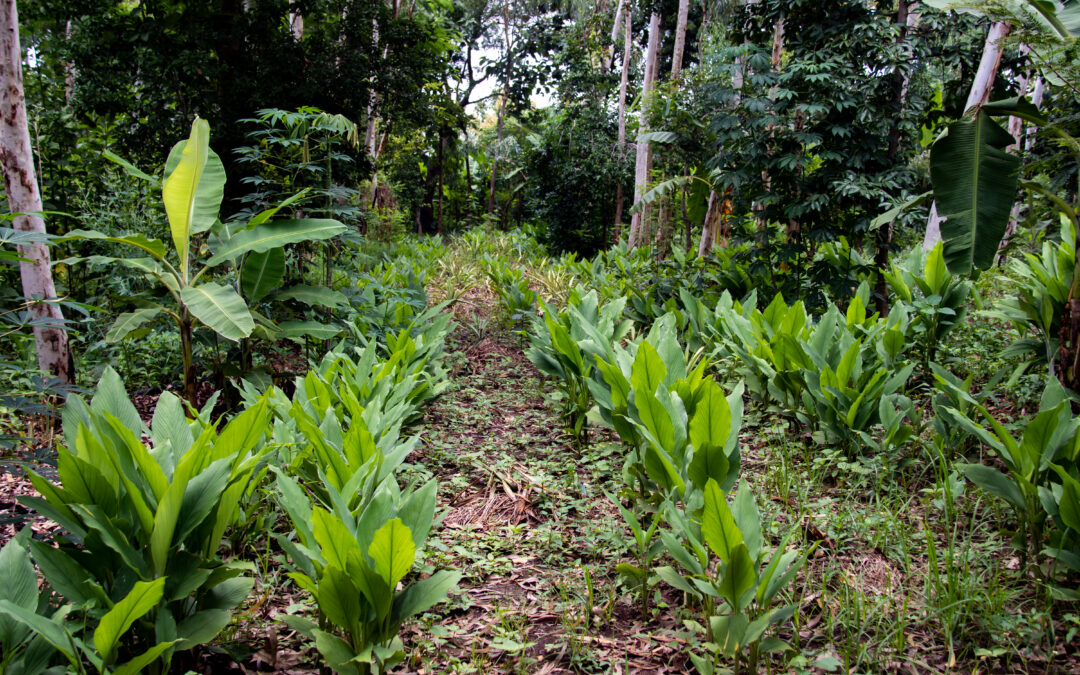
Health of Mother Earth Foundation (HOMEF), through the Hunger Politics Work Track, organised a one-day Practical Agroecology Training for Smallholder Farmers on 30 July 2026 at the SCL Farms, Kwali Area Council, Abuja, in collaboration with Be the Help Foundation. The training strengthened the capacity of smallholder farmers by combining indigenous farming knowledge with the scientific principles of agroecology to promote resilient and sustainable food systems.
The programme brought together 35 farmers from Abuja, Benue, and Kogi States, comprising 19 women and 16 men, and featured a combination of classroom sessions, practical demonstrations, and an extensive farm tour.
The training opened with a presentation on Agroecological Agroforestry, describing it as the deliberate integration of trees, crops, livestock, and ecological management practices to create productive and climate-resilient farming systems. It was noted that although Africa possesses nearly 60% of the world’s uncultivated arable land, the continent remains a net food importer while accounting for approximately 33% of the world’s undernourished population.
The session highlighted key agroecological principles applicable to agroforestry, including biodiversity conservation, mixed cropping, integration of indigenous tree species, crop and livestock diversification, multiple income streams, and knowledge co-creation. Participants were encouraged to diversify farming, build community resilience, document production costs and assess profitability.
It was further emphasised that African farmers have the capacity to feed the continent through locally adapted food systems without overreliance on imports. While agroecology may require greater initial investment and patience before returns are realised, it offers higher long-term economic, environmental, and social benefits. Farmers were also advised to focus on strengthening domestic markets before pursuing export opportunities.
The second sessionexamined the implications of genetically modified organisms (GMOs) and synthetic chemical agricultural inputs. An interactive poll revealed that approximately 60% of participants currently use synthetic agricultural chemicals, while all participants acknowledged limited knowledge of the chemical ingredients contained in these products.
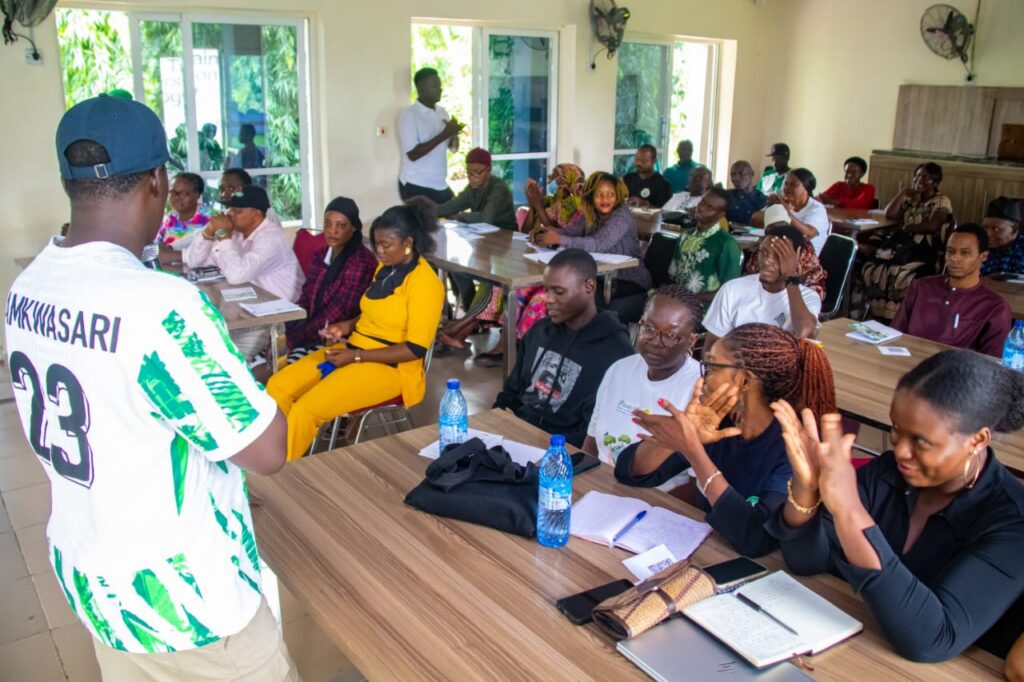
The facilitator explained that many chemical substances used in the production of synthetic fertilisers and pesticides are classified as Highly Hazardous Pesticides (HHPs) and have been banned in several European countries but continue to be marketed and used in Nigeria. She challenged participants to rethink conventional notions of increasing yield by asking not only “How do we increase yield?” but also “How long do we want to live?”
Participants were reminded that GMOs are living organisms whose genetic material has been altered in laboratories and that farmers should ask relevant questions before accepting seeds and other farm inputs.
One participant shared a case study about Bayer’s reported distribution of seeds during a church service in Benue State, highlighting concerns about how GMO seeds may be introduced into farming communities.
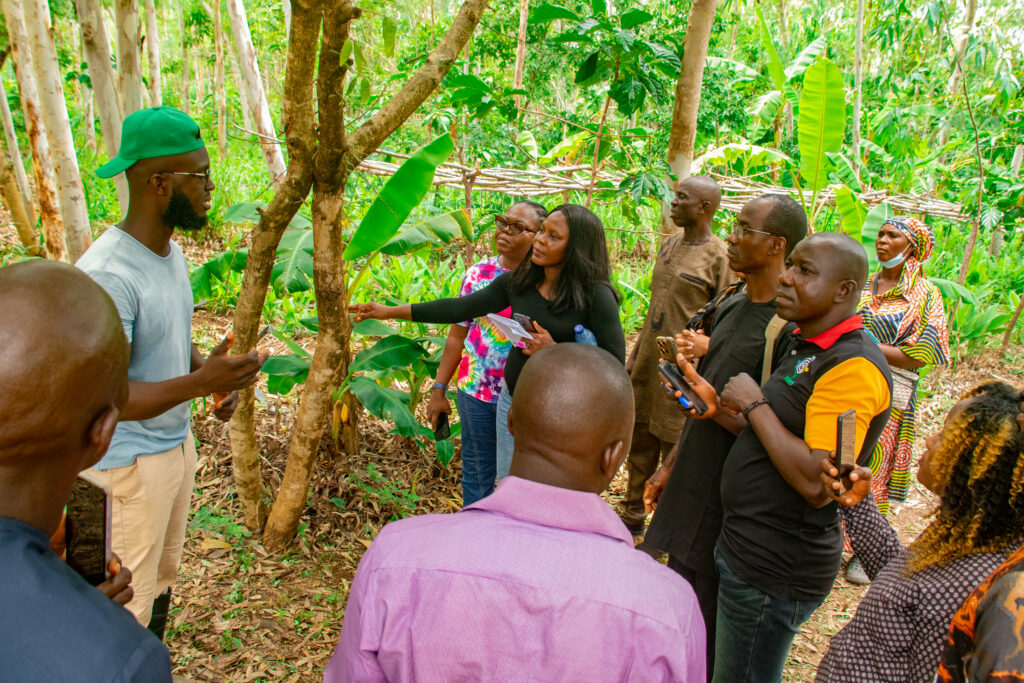
After the short presentations and discussion, participants were divided into two groups for a guided tour of the over 80-hectare SCL Farm, where they observed agroecological practices in operation.
The farm showcased diverse production systems including economic trees such as eucalyptus and mahogany, fruit orchards containing mangoes, oranges, and pawpaw, vegetable plots, and livestock units housing cattle. Participants observed practical demonstrations of mulching techniques to conserve soil moisture, suppress weeds, and improve soil biological activity.
The facilitators also demonstrated nursery establishment techniques and explained the importance of transplanting healthy seedlings after early development. Participants learnt that nursery poly bags should contain a 3:2:1 mixture of sharp sand, topsoil, and cattle dung to ensure proper moisture retention, aeration, and microbial activity.
The tour further demonstrated that bio-pesticides and bio-fertilisers can be produced entirely from locally available farm resources, including neem, pepper, cattle dung, and other organic materials.
The fourth session emphasised plant health, soil health and biodiversity conservation. The relationship between healthy plants, healthy soils, and biodiversity conservation was highlighted, including that plant health depends on effective pest management, efficient water and nutrient utilisation, crop rotation, and continuous disease monitoring.
Healthy soils contain abundant beneficial microorganisms that support nutrient cycling and crop productivity. Integrated farming practices including intercropping, mulching, organic fertiliser application, biological pest control, and reduced tillage were presented as essential approaches for improving soil fertility while conserving biodiversity.
The session also stressed the importance of maintaining farm records to support informed decision-making and improve farm management.
Participants discussed the adverse effects of bush burning, monocropping, and excessive use of synthetic agrochemicals on biodiversity. Burning was discouraged because it destroys beneficial soil organisms and alters soil pH beyond the optimum range required for healthy crop production.
The fifth and final session of the training entailed practical production of bio-pesticides and bio-fertilisers. Participants received practical instruction on producing bio-pesticides using locally available materials. It was emphasised that ingredient selection should correspond to the biology of the target pest.
The active ingredients discussed included: Papaya leaves (papain); breaks down protein, which breaks down the skin of the insects; Neem leaves and neem oil (azadirachtin); its intense taste turns pests away; Pepper (capsaicin); gives heat to the skin and the feeding system of insects; Garlic (allicin); serves as a repellent because of its pungent smell; and Onion (sulphur); performs the same task as garlic.
Participants learnt different processes that can be employed in the preparation, including fermentation and boiling techniques, as well as the importance of adding soap, preferably black soap, when using neem oil formulations to prevent coagulation of the pores on the leaves.
This session emphasised that although the ingredients may be combined, formulations should be tailored to specific pests. Participants were also advised to avoid pesticide application shortly before harvesting their crops.
Participants were introduced to Jeevamaruth, a bio-fertiliser designed to stimulate beneficial soil microorganisms and improve crop productivity.
The farmers were advised that after a few months of producing the bio-fertilisers, they could begin cultivating their own input crops such as bananas, pigeon pea, neem, and pawpaw, thereby reducing dependence on the market and minimising the risk of introducing GMO crops into the production process.
Participants also discussed alternative materials such as cowpea in place of pigeon pea, appropriate fertiliser application schedules based on crop performance, and the use of livestock manure from poultry and goats after adequate fermentation in water.
Key Outcomes
The training significantly strengthened participants’ practical understanding of agroecological farming systems and demonstrated how locally available resources can replace expensive synthetic agricultural inputs.
Farmers gained practical skills in agroforestry, biodiversity conservation, organic soil fertility management, nursery establishment, and the preparation of bio-pesticides and bio-fertilisers. Discussions throughout the training also increased awareness of the implications of GMOs and Highly Hazardous Pesticides, encouraging participants to make informed farming decisions.
At the conclusion of the programme, participants collectively called for stronger government policies that prioritise farmers’ interests, support agroecology, and prohibit the spread of genetically modified organisms.
Recommendations
The following recommendations emerged from the training:
- Government should increase investment in programmes that encourage young people to engage in agriculture, thereby securing the future of Nigeria’s food systems.
- Similar agroecology training programmes should be extended to agricultural extension workers to facilitate wider dissemination of knowledge among farming communities.
- Community seed banks should be promoted to preserve indigenous seed varieties and strengthen local seed sovereignty.
- Practical demonstrations should remain central to future training, as they significantly improve participants’ understanding and adoption of agroecological practices.