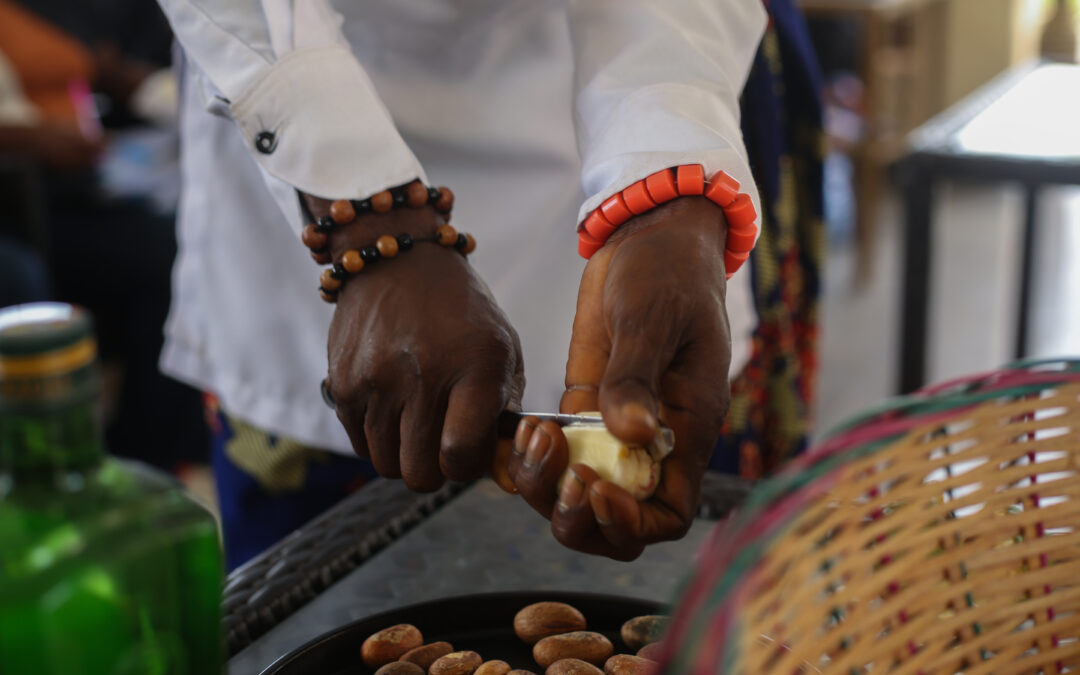
HOMEF Wisdom Gatherings demand indigenous knowledge and community power in environmental restoration
Climate and environmental justice are also struggles over language, knowledge, culture, and power. When communities lose the languages through which they understand their land and waters, they lose part of their ecological memory. When environmental decisions are communicated only in technical language they do not understand, communities are denied meaningful participation in decisions affecting their lives.
This was the central message emerging from two Wisdom Gatherings organised by Health of Mother Earth Foundation (HOMEF) at Ikot Nseyen, Ikono Local Government Area of Akwa Ibom State, on September 10, 2026, and in Kaani, Khana Local Government Area of Rivers State, on September 12, 2026.
Bringing together academics, traditional leaders, civil society actors, media practitioners and community members, the gatherings explored indigenous philosophies, languages, and ecological knowledge as pathways to socio-ecological justice, environmental restoration, and community power. For HOMEF, reclaiming indigenous knowledge is not a retreat into the past. It is an act of decolonisation and a challenge to knowledge systems that dismiss indigenous ways of knowing while treating dominant Western frameworks as the only legitimate source of environmental solutions.
Language shapes our relationship with nature
At Ikot Nseyen, the Wisdom Gathering on Commons, Care and Community Energy Sovereignty was held under the theme, “The Foundation of Language and Indigenous Philosophies for Socio-Ecological Justice.”
At the centre was the Ibibio concept of Abasi-Isong and Unen Nkankuk (God of the earth and environmental rights). The concept places the right to a healthy environment within the wider questions of dignity, culture, livelihoods, community power, and the wellbeing of generations yet unborn. It also challenges the assumption that the environment is simply a stock of resources available for extraction. The words through which people understand nature influence how they relate to and treat it. When land is reduced to an oilfield, rivers to waste channels and forests to commodities, destruction becomes easier to justify. When nature is understood as integral to life, environmental care becomes a matter of responsibility, justice and survival.
Speaking at Ikot Nseyen, HOMEF Executive Director, Dr Nnimmo Bassey stressed that Wisdom Gatherings provide a space to draw wisdom from local languages and cultures and use it to build a preferred future.
“Language is not neutral. Stories and histories construct identities and worldviews, and coloniality has permeated the creation and use of words, as well as the actions driven by language. If we are to achieve justice, movement and power, our language and knowledge must be intelligible and must support the transformation we seek. We have to reject concepts that lock us into subjugation and destruction and instead promote environmental repair, recovery, restoration, and reparation.”
This means interrogating environmental approaches that reproduce the same relationships of power responsible for ecological destruction. It means moving beyond technical solutions alone towards environmental justice, cultural identity, and community control.
Abasi-Isong: nature is more than a resource
At Ikot Nseyen, Prof. Emmanuel M. Akpabio presented “The Abasi-Isong Theory of Environmental Stewardship: Towards an Indigenous African Framework for Environmental Ethics and Ecological Governance.”
He argued that African cosmologies should be recognised as sources of environmental philosophy, not merely as cultural curiosities. He stressed that communities can modernise without westernising, citing Japan as an example of a society that has embraced modernisation while preserving its cultural identity.
Akpabio questioned why modernisation in Africa is often equated with abandoning indigenous culture, noting that Japanese society is celebrated for modernising without completely westernising its cultural identity, whereas African societies sometimes demonise their own indigenous practices in pursuit of modernity. According to him, the Ibibio understanding of Abasi-Enyong mme Abasi-Isong (God of Heaven and God of Earth) offers a framework based on sacred accountability, ecological interconnectedness and responsibility to future generations.
He said, “Abasi-Isong gives us a different way of understanding our relationship with the Earth. The Earth is not simply land, property or capital that can be converted into a commodity. It is part of a sacred order, and that means our responsibility to the environment is not only a legal or social obligation. It is also a moral obligation. When we degrade the Earth, we are not merely damaging a physical resource; we are violating a relationship and a responsibility that connects human beings, the Earth and generations yet unborn.”
This philosophy challenges systems that reduce nature to property or capital. It recognises ecological wellbeing as inseparable from human wellbeing and offers an indigenous basis for environmental ethics, governance, and education. The argument is not a rejection of contemporary science or modernity. Rather, it is a call for modernisation without cultural erasure, for indigenous knowledge and contemporary science to engage one another without automatically placing one above the other.
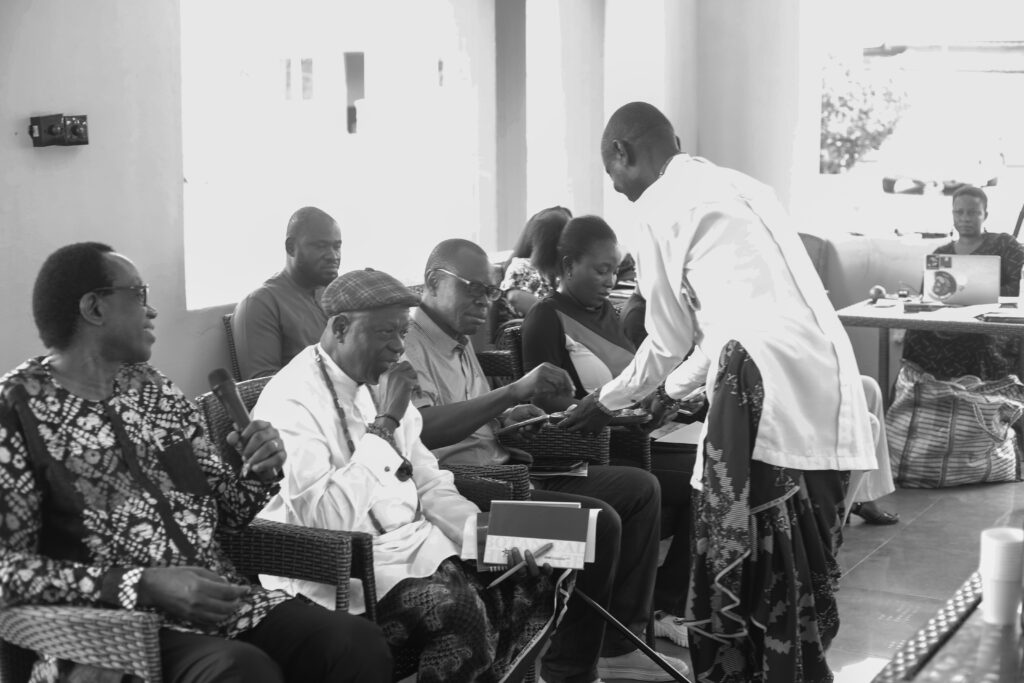
Unen Nkankuk and EtiUwem: rethinking the good life
The Ikot Nseyen gathering placed the Ibibio concept Unen Nkankuk, environmental rights, at the centre of its reflection. Unen means right, while Nkankuk means environment. The concept links environmental rights with dignity, culture, livelihoods, community power, and the wellbeing of future generations. It challenges the treatment of nature as a stock of resources for extraction and asks a fundamental question: what kind of life is considered development, and who pays its ecological cost?
This connects with EtiUwem, an Ibibio philosophy of good life or good living, which emphasises harmony with nature and other beings, dignity, fairness, integrity, solidarity, and contentment. EtiUwem places communal ownership and control of local resources against exploitation, expropriation, and the commodification of nature, pointing instead towards green democracy and environmental justice. The principle of Sankofa, returning to retrieve what has been forgotten in order to build the future, reinforces the need to recover useful ecological knowledge without romanticising the past.
Indigenous language, knowledge must not be demonised
At Kaani, Chief Magnus Lesor Edooh, Executive Director of the Indigenous Language and Cultural Empowerment Foundation, brought the language question directly into ecosystem restoration.
His keynote, “Ecosystem Restoration: The Role of Indigenous Languages and Philosophies in Achieving Socio-Ecological Justice,” argued that restoration cannot succeed when communities cannot understand the language through which restoration is explained. He cited the Ogoni experience, where the UNEP assessment findings and recommendations were translated into Ogoni languages and communicated through community forums, demonstrating that environmental restoration must speak the language of the people.
Both gatherings rejected the dismissal of indigenous knowledge as primitive, superstitious or incompatible with modernity. Traditional communities developed systems for understanding seasons, rainfall, rivers, wetlands, forests, wildlife, medicinal plants, soils, fishing grounds, agricultural cycles, and weather patterns. This knowledge was transmitted through language, stories, songs, proverbs, rituals, taboos, and everyday practices.
In traditional Ibibio communities, for instance, restrictions on farming around certain streams or on destroying forests, which were regarded as sacred, could also function as forms of ecological protection. The lesson is not that every traditional belief or practice should be accepted uncritically. Rather, indigenous knowledge deserves to be heard, understood, interrogated, and respected, with useful ecological wisdom identified and strengthened.
As the Kaani gathering demonstrated, indigenous knowledge should not stand against contemporary science. It should engage with it. Chief Edooh proposed a three-way partnership for indigenous knowledge, modern science, and community participation.
Indigenous knowledge brings generations of observation and lived experience; science provides tools for measurement, verification, and restoration; community participation provides ownership, local monitoring, and long-term protection. The goal is therefore not indigenous knowledge versus science, but knowledge systems working together without one being automatically treated as superior.
If language disappears, ecological memory disappears
Indigenous languages should therefore be incorporated into environmental impact assessments (EIAs), public hearings, memorandum of understanding (MoUs), remediation information, environmental education, community monitoring, early-warning systems, restoration training, and policy communication.
Participants called for environmental documents to be broken down into indigenous languages and for interpreters to be incorporated into advocacy and community engagements. They also advocated environmental clubs in schools, legislative backing for indigenous languages, and a shift from the dominant top-down model of engagement with oil companies to a bottom-up approach.
The concern goes beyond communication. Language is memory. Words carry knowledge of plants, fish, medicinal species, rivers, wetlands, farming, fishing, weather, conservation, and relationships with nature. When a language disappears, some of the knowledge embedded within it can disappear with it.
The Kaani gathering captured this through indigenous expressions from across the Niger Delta. Ebaaloo sitam, an Ogoni expression, conveys teamwork; Kpooge loo nu speaks to preservation; Ologbo-gbe in Izon relates to compensation or payment of a fine; while the Odual expression Edumubooolghadio expresses the indispensability of forests and their importance to family survival. The Kalabari word Usala refers to things that are not to be touched. These are not simply words. They encode values, rules, relationships, and ecological memory.
Culture is a language of conservation
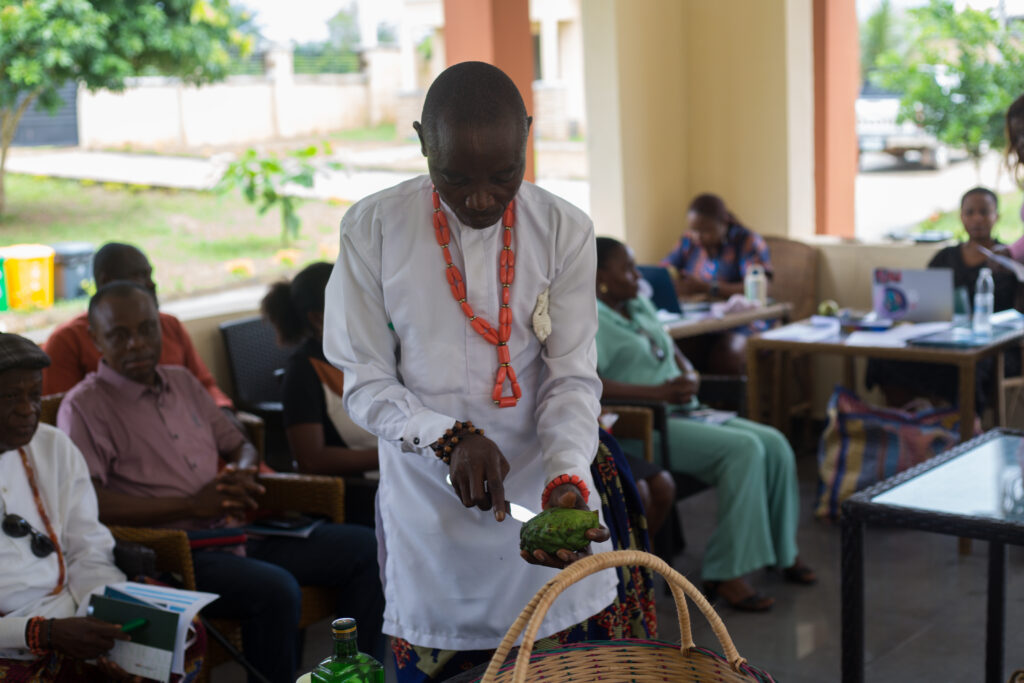
The Wisdom Gatherings also showed how environmental knowledge can be communicated through cultural forms. At Ikot Nseyen, Dr Ofonime Inyang, Associate Professor and Head of the Department of Theatre and Film Studies at the University of Uyo, demonstrated how poetry, songs, proverbs, and performance can carry environmental knowledge and make it accessible to communities.
An Ibibio song shared at the gathering by Dr Inyang carried the message: “Yak itim ikama nkankuk nyin, koro nkankuk nyin enye ado uwem.” Meaning, “Let us take care of our environment because our environment is integral to life.”
Concepts such as Utom Idung (community service/work) and Ido Ukang Nnyin (the ways of our society or attitude of our people) similarly demonstrate how indigenous communication can connect environmental responsibility to community values. The erosion of indigenous languages is therefore also an erosion of cultural tools for environmental education.
Restoration must restore people, not only ecosystems
The two gatherings made clear that environmental restoration cannot be reduced to cleaning contaminated land while leaving affected communities economically and socially vulnerable. Edooh captured this concern: “We have been advocating that the environment should not be clean and the people are still suffering. So, bringing livelihood into the remediation process is a welcome development in Ogoni.”
Restoration must therefore address livelihoods, dignity, food systems, health, community resilience and ecological functions, alongside contaminated soil and water. Women, young people, and traditional institutions must have meaningful roles in this process.
Edooh proposed an Ogoni Indigenous Ecological Knowledge and Restoration Initiative to document Ogoni names for plants, fish species, medicinal plants, rivers, streams, and wetlands, as well as traditional farming and fishing knowledge, conservation practices, climate indicators, environmental vocabulary, and oral histories.
Such knowledge could be documented in Khana, Gokana, Tai, Eleme and other relevant Ogoni dialects, alongside English and scientific terminology, creating a bridge between elders and scientists, traditional rulers and researchers, indigenous knowledge, and modern technology.
From extraction to care, from spectators to partners
Across both gatherings, it came through that climate and environmental justice require a transformation in how nature, knowledge and communities are valued. The answer to ecological destruction cannot be another cycle of extraction dressed in the language of development. The goal must be restoration, ecological recovery, community sovereignty and a just relationship with nature.
This means documenting indigenous ecological knowledge; protecting endangered languages; using indigenous languages in EIAs, MoUs, public hearings and remediation; training interpreters; establishing school environmental clubs; strengthening traditional institutions; supporting women and youth in restoration; ensuring livelihood components in remediation; and creating accountable community-led monitoring systems. It also means recognising that the environment is not merely a warehouse of commodities. Land is not merely an oilfield. Rivers are not waste channels. Forests are not disposable resources. Communities are not sacrifice zones.
The Wisdom Gatherings at Ikot Nseyen and Kaani point towards another possibility; an environmental future built from the knowledge, languages, and values of the people themselves. As Nnimmo Bassey said at Ikot Nseyen: “We may not do everything at once, but we can certainly do one thing at any one time. We will take a step on the ladder to our preferred future.”
For everyone, that step begins with reclaiming the languages that remember the land, restoring the ecosystems that sustain life, and rebuilding the community power necessary to defend both and secure the needed socioecological transformation.
Reclaim our languages. Restore our environment. Restore our relationship with nature. Embrace socioecological transformation.