Sustain-Ability Academy is a knowledge and learning platform of Health of Mother Earth Foundation (HOMEF) that creates space for critical conversations on environmental justice, food systems, and socio-ecological transformation. It brings together students, activists, researchers, and community members to examine pressing issues, challenge dominant narratives, and build collective understanding. Through various sessions, the Academy promotes awareness, encourages people-centred solutions, and supports actions that promote justice, sustainability, and the protection of communities and ecosystems.
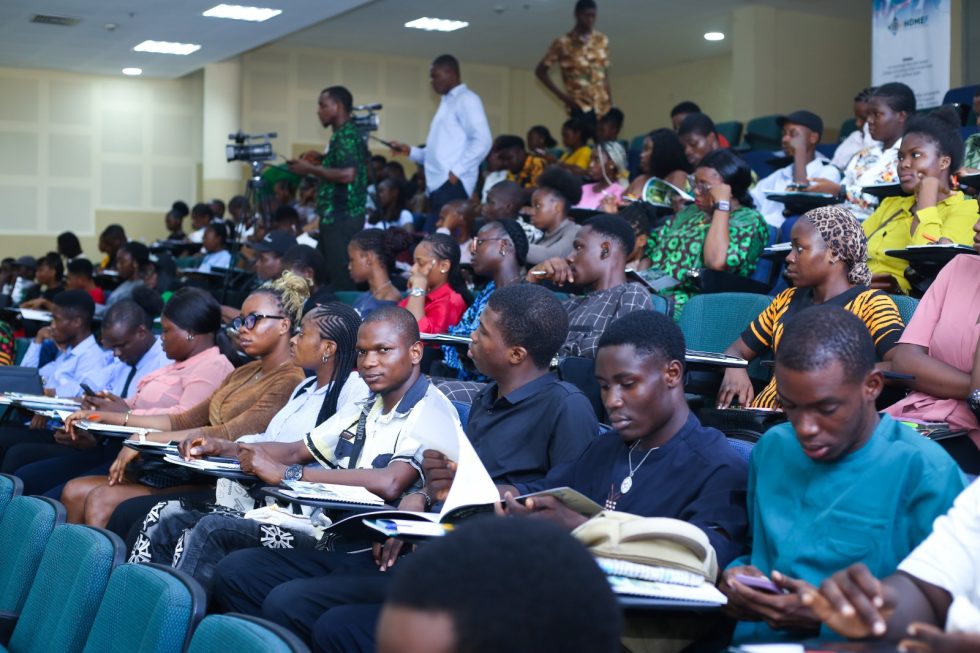
The session on Food, Power and the Politics of Hunger, which was held on the 19th of March 2026 , brought together a diverse audience to critically reflect on local and global food systems and the power dynamics affecting not just the rights of consumers and producers but also socio-economic wellbeing and cultural identity. The event, which was jointly convened by HOMEF and the Centre of Politics, University of Port Harcourt, explored the structural, political, ecological, and cultural dimensions of hunger, moving beyond conventional explanations of food insecurity to interrogate deeper systems of power that shape who eats, what is eaten, and who bears the consequences of political decisions on our food system.
Food occupies a central place in our culture. It plays a key role in religious and social activities and marks the passage of time and seasons. Food is not merely something consumed to quench hunger; it is a celebration, a cultural anchor, and a force that unites families and communities. Across societies, food varieties reflect the diversity of peoples and cultures.
Food can, however, be weaponised, as seen during the Biafra–Nigerian war, where it greatly impacted nutrition and livelihoods of the Eastern peoples. Weaponisation of food exists in today’s world in carefully calculated and disguised forms of food aid, genetic modification, bio-fortification, hybridisation, and other such interventions which bring about steady erosion of memory, dignity and identity connected to local cuisines. Food becomes a weapon when the rights to save, share or reuse seeds are suppressed in the name of novel genetic varieties that are obtained from the farmers’ seeds.
We must critically examine the root causes or main drivers of hunger in Nigeria/Africa and resist its weaponisation to entrench a culture that does little or nothing to improve food systems but instead maximises profit for a handful of enterprises.
Agriculture must be understood as a way of life, not just a business. Policies that disrupt seed sharing undermine community solidarity and must be overturned.
The rise of fast-food culture reflects instant gratification and contributes to poor nutrition and junk culture. We must decolonise our food systems, and this requires that we liberate our tongues and taste buds. It requires that we recover lost varieties. It requires that we reject GMOs, that we preserve and share indigenous seeds, and celebrate our foods. It requires that we expose the underlying market forces driving and influencing food system governance solely to their benefit and to the detriment of small holder farmers who feed the world.
Food connects people to land, labour, and culture. Power determines how those connections are organised. And hunger emerges when those systems deny people access, dignity, and control.
Hunger is not simply a production problem but a question of access and power. Evidence from Nigeria shows significant food waste, widespread food insecurity among farmers, yield gaps, and rising hunger levels. Evidence also shows that hunger persists even where food is available. In Nigeria, large amounts of food are lost after harvest, while many farming households remain food insecure. This highlights that the problem is not simply one of production, but unequal access, weak support systems, and systemic inequality.
Food systems are not neutral; they are structured by power dynamics across key areas such as seeds, land, trade, and dominant narratives. Control over these areas determines who can produce food, who benefits, and who is excluded. Global systems and policies often favour large-scale actors while marginalising smallholder farmers and local communities. Transformation requires redistributing power. Communities must have the right to define their food systems, preserve seeds, and ensure accountability.
Ultimately, hunger is not a technical failure but a governance and justice issue. Addressing hunger requires transforming food systems by redistributing power, strengthening community control, and prioritising food sovereignty—where people have the right to define their own food systems.
The Academy had in attendance students and staff of the University of Port Harcourt and Ignatius Ajuri University, members of civil society organisations, individuals from media outlets and community members.
Overall, the session showed that hunger is not just about lack of food, but about deeper issues of power and access. It highlighted the need to include communities in decision-making and to work towards food systems that are fair, inclusive, and sustainable.