
We are living in a moment when the world is asking difficult questions about climate breakdown, ecological collapse, and deepening inequality, yet offering increasingly convenient answers. Across global policy spaces, these crises are often framed as challenges that can be managed, adjusted, or innovated away. However, closer examination reveals that many of these so-called solutions do nothing more than protect and sustain the very systems responsible for these challenges.
It is within this context that the EtiUwem School of Ecology on Igniting Ecological Consciousness was convened. The weeklong school session created a space for a different kind of engagement, one that moves beyond surface-level explanations to critically examine the deeper political, economic, and historical structures shaping ecological realities. The school was grounded in the understanding that to achieve EtiUwen (the good life), we must first understand the conditions that make life possible and the forces that threaten those conditions.
Central to the school’s discussions was ecological justice. Facilitators emphasised the interconnectedness of environmental degradation and social inequality, highlighting how communities least responsible for ecological harm often bear its greatest consequences. Ecological justice was presented as a framework grounded in equity, accountability, intergenerational responsibility, and respect for both human and non-human life. The school also examined the politics of hunger and food systems in Africa. Participants explored how food insecurity is driven not merely by low production, but by governance failures, corporate control, and environmental degradation. Discussions raised concerns about the widespread use of harmful agricultural chemicals and the exploitation of food systems for political and economic gain. In contrast, food sovereignty emerged as a key alternative emphasising local control, ecological farming/agroecology, indigenous knowledge, and community well-being.
Another major area of focus was the need to rethink dominant ideas of development. Participants critically engaged with economic models that prioritise growth while neglecting environmental sustainability and social equity. Facilitators called for a redefinition of development grounded in African values of community, dignity, solidarity, and ecological balance, while also challenging education systems that disconnect people from their histories and ecological knowledge. Discussions on climate action further exposed the limitations of many widely promoted “green solutions.” Participants examined how initiatives such as carbon offset schemes and transition mineral extraction often reproduce exploitation under the guise of sustainability. These conversations reinforced the need for climate responses rooted in justice, democratic participation, and community ownership rather than corporate-driven interests.
The session also deepened conversations on African environmentalism and governance. It was highlighted that many African societies historically maintained systems of environmental stewardship through cultural practices and communal responsibility. However, colonialism and capitalism disrupted these systems, transforming land and nature into commodities for extraction and profit. Sessions on advocacy and movement building equipped participants with practical tools for organising and influencing change. Through discussions on community mobilisation, coalition building, and strategic engagement, participants explored how to strengthen movements capable of confronting environmental injustice.
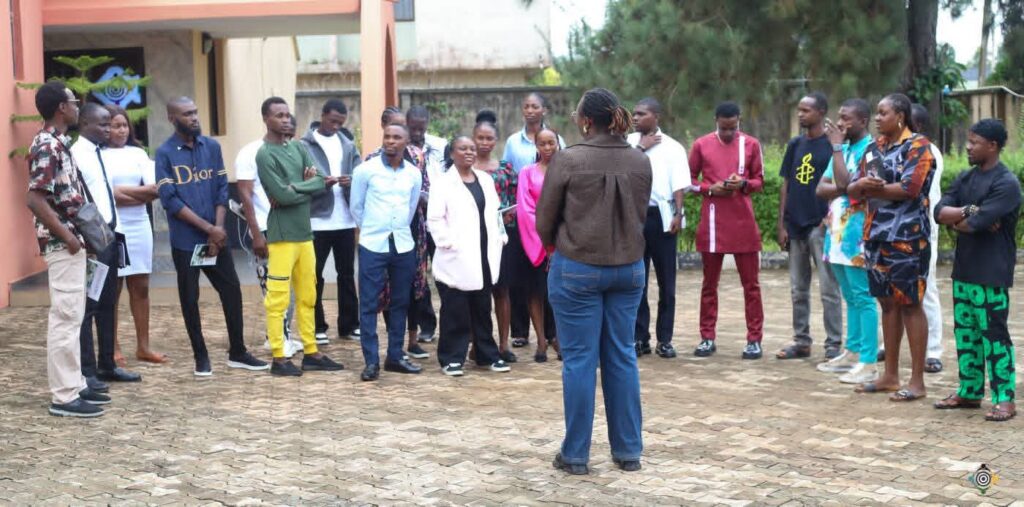
Throughout the event, scholars engaged in cohort activities, interactive sessions, reflections, group discussions, and a field trip, all of which encouraged critical thinking and collective learning. These engagements created space for a deeper understanding and connection between theory and lived experience. In closing, participants were reminded that humans are part of the ecosystem, not its owners, and that ecological justice requires people-centred and community-led alternatives. They were encouraged to move beyond awareness into action, resisting false solutions while committing to building systems rooted in justice and sustainability.
In the end, the EtiUwem School of Ecology on Igniting Ecological Consciousness strengthened participants’ ecological awareness, deepened political understanding, and inspired renewed commitment to collective action. Scholars left with clearer insight, sharper questions, and a stronger sense of responsibility, ready to mobilise communities, anchor change, and disrupt dominant narratives.