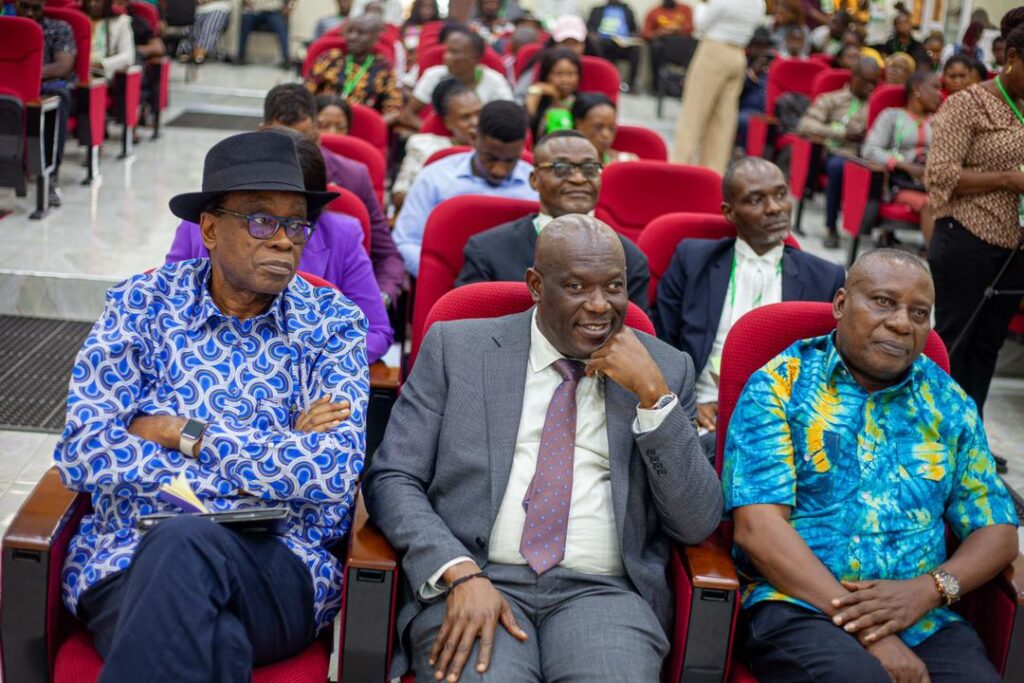
Seventy years after Nigeria began commercial oil production, stakeholders from across the Niger Delta have called for an end to new fossil fuel extraction, insisting that the region needs environmental restoration, reparations, and a just transition rather than more oil wells.
The call was made during the Niger Delta Climate Week held in Port Harcourt from 29th June to 3rd July 2026, where environmental advocates, community representatives, researchers, youth groups, and climate justice campaigners gathered to reflect on seven decades of oil extraction and chart a path towards ecological recovery. Organised by the Lekeh Development Foundation in collaboration with Health of Mother Earth Foundation (HOMEF), Oilwatch International, COSET, Friedrich Ebert Stiftung and other partners, the conference examined the environmental, social, economic, and climate implications of fossil fuel extraction while exploring pathways towards a just transition.
Commercial quantities of crude oil were first discovered in 1956 in Otuabagi, Oloibiri fields; present-day Bayelsa State, with Nigeria exporting its first shipment in 1958. While oil has since become the backbone of the country’s economy, generating billions of dollars in revenue over the decades, the Niger Delta has borne the environmental costs without enjoying corresponding development benefits. Across the region, oil-producing communities continue to face degradation, and basic infrastructure and public services remain inadequate despite the enormous wealth generated from the region’s natural resources.
Setting the tone for the conference, Executive Director, Health of Mother Earth Foundation (HOMEF), Dr Nnimmo Bassey, described the history of oil extraction in the Niger Delta as one of ecological destruction and social injustice. “Seven decades of oil extraction have brought no benefit to the Niger Delta. It’s brought only negative impacts on the communities,” he said, noting that while oil revenues have enriched the national economy, host communities have been left with polluted environments and broken livelihoods.
He emphasised that the scale of environmental degradation has become so severe that restoring the Niger Delta would require enormous financial and technical investments. Rather than opening new oil wells, he called for the decommissioning of ageing oil infrastructure, comprehensive environmental remediation, and compensation for affected communities. According to him, cleaning up the Niger Delta should be viewed not as a financial burden but as an opportunity to create thousands of jobs while restoring damaged ecosystems. He emphasised that local communities possess valuable indigenous knowledge that should form part of any large-scale restoration programme, from mangrove regeneration to ecological monitoring and environmental stewardship.
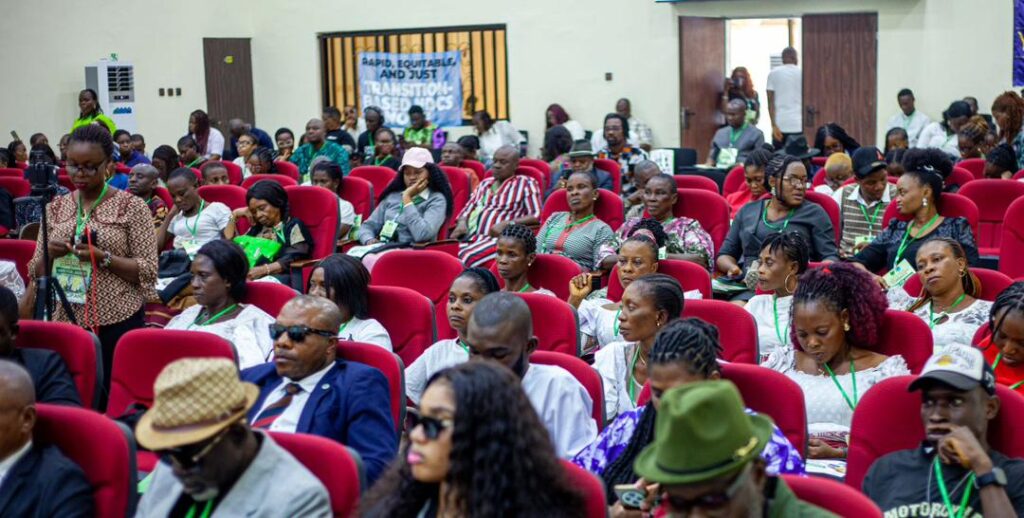
The conference also examined the growing intersection between fossil fuel extraction and climate change. Participants noted that despite global commitments to reduce greenhouse gas emissions, gas flaring continues across the Niger Delta while new fossil fuel projects are being promoted. Such contradictions, they argued, undermine climate action and deepen environmental injustice.
A major highlight was a robust debate around one of the defining questions of global climate policy: Should fossil fuels be phased down or phased out? Participants engaged in thoughtful discussions on the implications of both approaches for Nigeria and the wider African continent. While acknowledging the complexities of energy transition, the overwhelming majority ultimately rallied behind the call for a complete phase-out of fossil fuels, arguing that the scale of ecological devastation in the Niger Delta leaves little room for continued expansion or prolonged dependence on oil and gas. Another concern was the divestment of international oil companies from onshore operations. Participants warned that while ownership of oil assets may change, responsibility for decades of environmental pollution and ecological damage must not be transferred or abandoned. They called for greater transparency in divestment agreements and stronger mechanisms to ensure accountability for legacy pollution.
Throughout the conference, speakers repeatedly emphasised that environmental justice must go beyond compensation for individual oil spills. They argued for comprehensive ecological restoration, reparations for affected communities, and recognition of the historical environmental debt owed to the Niger Delta after seventy years of intensive resource extraction.
Beyond the plenary sessions, the conference created opportunities for participants to engage more deeply with the realities of environmental degradation and restoration. A film documentary screening provided a powerful visual account of the environmental and human impacts of fossil fuel extraction, stimulating further dialogue on resistance, resilience, and climate justice. Participants also embarked on a field visit to the Hydrocarbon Pollution Remediation Project (HYPREP) Centre of Excellence, where they gained firsthand insight into ongoing efforts to build local capacity for environmental remediation and the long-term work required to restore polluted ecosystems in Ogoniland and the wider Niger Delta.
The conference also challenged the widespread assumption that continued oil extraction is essential for Nigeria’s economic survival. Participants noted that excessive dependence on fossil fuels has exposed the country’s economy to repeated shocks while discouraging investment in sustainable sectors such as agriculture, renewable energy, and local manufacturing. Diversifying the economy, they argued, would not only strengthen national resilience but also reduce pressure on already degraded ecosystems.
Community-led resistance movements against destructive extraction also featured prominently during the discussions. Participants reflected on successful struggles for environmental justice around the world, including campaigns that have halted fossil fuel expansion and protected ecologically sensitive areas. These examples reinforced the importance of solidarity, community organizing, and people-centred advocacy in confronting extractivism.
The conference equally reaffirmed that ongoing environmental restoration efforts in Ogoniland and across the Niger Delta should not be undermined by renewed oil exploration or production. Participants maintained that genuine healing requires ending practices that continue to pollute ecosystems while remediation efforts are underway. As the conference concluded, a strong consensus emerged around a shared vision for the future of the Niger Delta. Participants called for an immediate halt to the licensing of new oil wells, the decommissioning of obsolete and abandoned oil infrastructure, accelerated cleanup and restoration of polluted ecosystems, reparations for affected communities, economic diversification beyond fossil fuels, and a just transition to community-led renewable energy systems. The overarching message from the Niger Delta Climate Week was that after seventy years of oil extraction, the people of the Niger Delta are no longer asking for promises of development tied to fossil fuels. They are demanding healing, ecological restoration, accountability, and a future in which both people and nature can thrive.