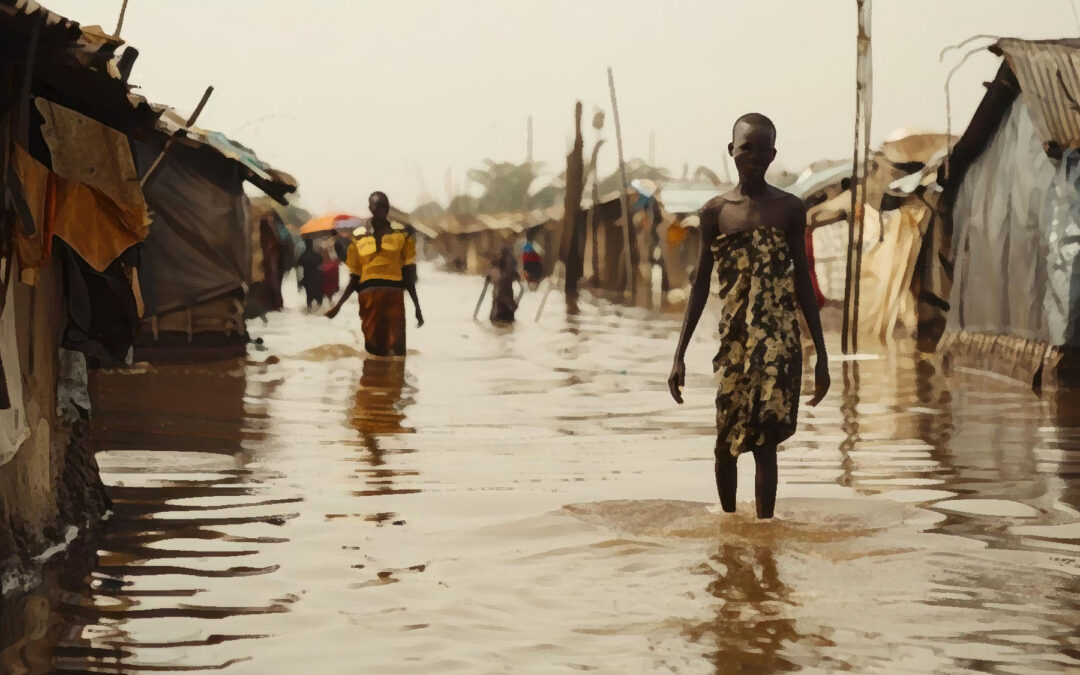
Rapid urban expansion in Nigeria’s coastal cities is producing severe environmental trade-offs that undermine climate resilience, livelihoods, and justice. Under the banner of development, waterfront and coastal communities are increasingly exposed to forced displacement, environmental degradation, and human rights violations, often without consultation, protection, or alternatives. In Makoko, Lagos State, Nigeria, recent government-led demolitions and evictions have escalated into violent enforcement actions, resulting in the destruction of thousands of homes, the displacement of residents, and the reported loss of lives, including infants and elderly people. Also, in Apakin, a coastal community facing severe shoreline erosion and ocean surges, residents continue to lose homes, livelihoods, and even ancestral graves to the sea. Climate impacts are intensified by coastal development and dredging activities, leaving the community exposed and largely unsupported.
It is within this frame that Health of Mother Earth Foundation held a conversation session on Drowning Communities: Human Rights, Loss and the Price of Development. The conversation held on the 23rd of June 2026 aimed to reflect on the impacts of coastal urban development and how these expansions contribute to displacement, livelihood loss, and human rights violations in vulnerable communities.
The Discussant, Betty Abah, who is a renowned Human Rights activist, has worked in Makoko Community for over a decade, shared the reality of the experience of the residents of Makoko. She mentioned that the reality is that Makoko is not just statistics but a place where people are always negotiating for survival as it is constantly faced with the threat of demolition and displacement, and the community has become recognised all over the world not for its fishing culture, but as a symbol of injustice and human rights violations. The discussant also noted that the residents of Makoko have demonstrated resilience, as they have resisted oppression through the support of civil society organisations by documenting violations, calling out the government and refusing to accept displacement as inevitable. Calling back to the past, the discussant highlighted that Maroko community, a fishing coastal community, was also demolished by the Federal Government in 1981 in the guise of rising sea level and without adequate compensation and alternatives to the residents, and on that same land now sits a luxury housing estate.
The conversation also shed light on the role civil society organisations must play in ensuring the government’s accountability. Civil society organisations are always the watchdogs, and they should take the lead role in amplifying community voices, exposing violations and ensuring that injustice is not ignored. Emphasis was made on the need to set up systems that regulate demolitions, guarantee compensation and create space for communities to be heard before decisions are made.
The session ended by reiterating that the price of development should not come at the cost of human lives, and that a people-centred and ecological approach must involve communities in decision-making, especially on issues that directly affect them, while protecting livelihoods and ensuring that climate responses and urbanisation do not become another pathway for displacement. There was also a clear call on the government to take responsibility by putting in place structures that guarantee accountability, meaningful compensation, and sustained engagement with vulnerable communities.