Climate change is a global phenomenon that is gravely impacting the world ocean – accounting for increased sea level rise, acidification, increasing temperature and contributing significantly to increasing dead zones. The waterbodies around Africa are not spared in this. Africa is dynamically positioned – bordered to the Northeast by the Red Sea, to the North by the Mediterranean Sea, Indian Ocean to the East, and the Atlantic Ocean to the West. Climate change was caused and continue to be exacerbated by human activities which continues to introduce not only harmful emissions but also synthetic chemicals and materials to the ocean.
The Atlantic Ocean and its associated estuaries, lagoons and creeks have never been treated so carelessly as we see these days. This is because there is astronomical increase in exploration and exploitation activities both for minerals offshore and mindless plunder of other ocean goods and services. The ocean and other water bodies continue to be subjected to different extractive regimes which are the drivers of pollution, overfishing and illegal, unregulated and unreported fishing; while also being responsible in part, for human rights abuses against the populations who live on coastlines and others whose economies are connected to the ocean. Just like the Atlantic, the Indian Ocean faces a plethora of problems including pollution from plastics, IUU, climate change issues as well as historic conflicts over jurisdiction and control.
The mediterranean and the red seas create the routes that connect Asia, Europe and Africa. They are high traffic routes for transportation. Aside this attributes, they are also hit by climate change events – with research showing that the mediterranean has become the saltiest and has attained record high warming between 1971 and 2010. We suspect that this may have worsen since then.
In all of these, what is clear is that the waterbodies around Africa are in dire strait and require a multi-sectoral consensus building to take further deep dives to understand the state of our oceans and co-develop both adaptation and mitigation strategies.
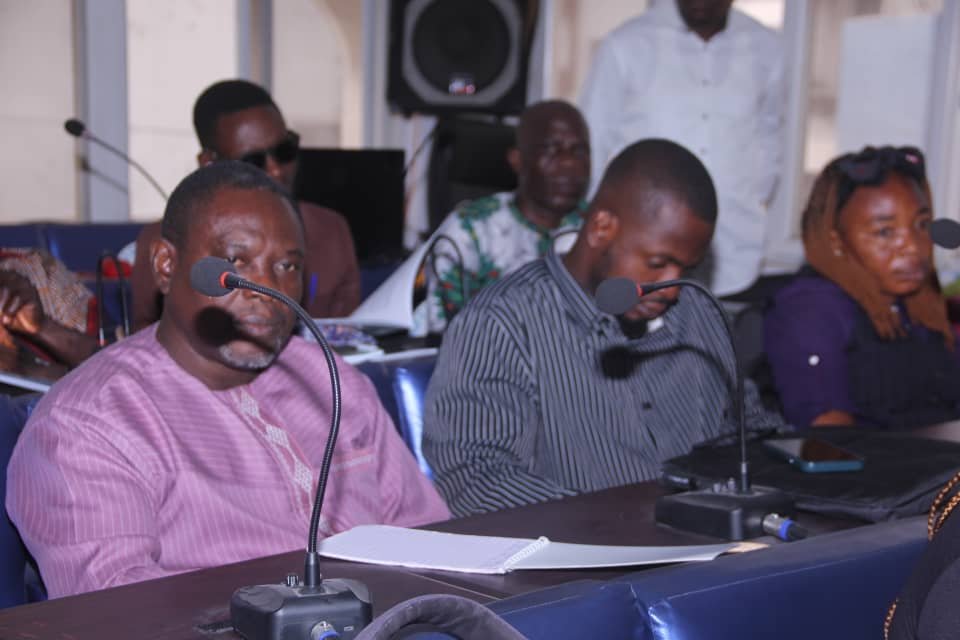
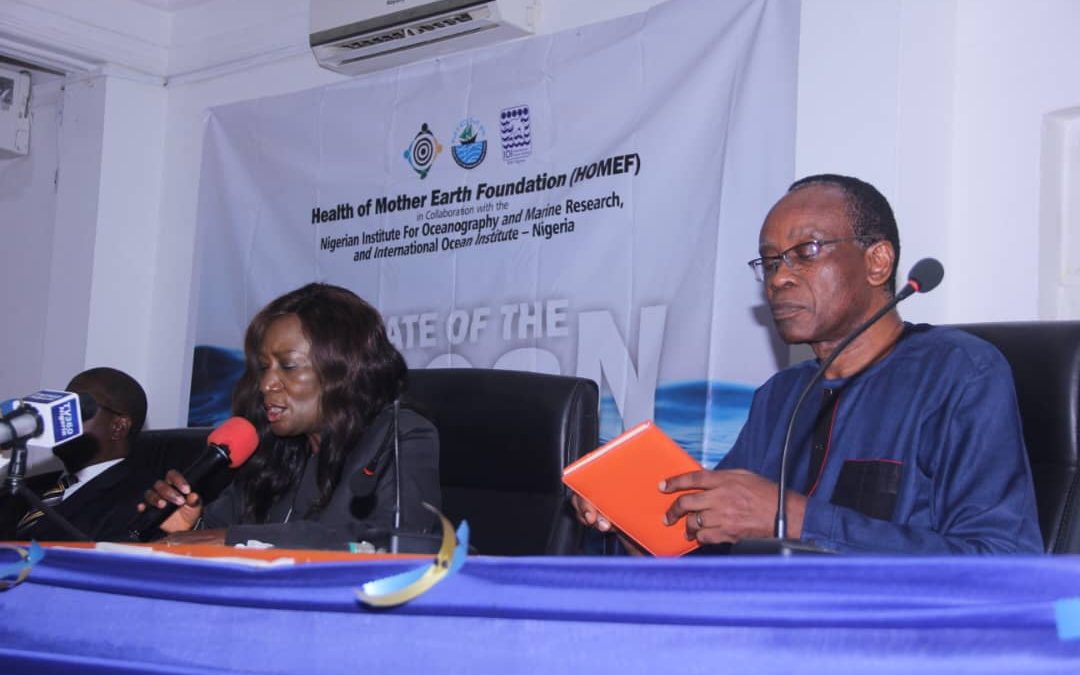
Against this backdrop, Health of Mother Earth Foundation (HOMEF) in collaboration with the Nigerian Institute for Oceanography and Marine Research (NIOMR) and the International Ocean Institute – Nigeria Centre (IOI-Nigeria), organised a hybrid State of the Ocean Workshop. The meeting held on Monday 3rd of February 2025 with physical participants made up of community fishers, researchers from the earth science department in University of Lagos, University of Port Harcourt and University of Calabar, NIMASA, and the Lagos State Ministry of Agriculture. The online participants were stakeholders from the Institute for Human Rights and Business (IHRB), Togo, Senegal, Sierra Leone, Cameroon, South Africa, Egypt and Ghana.
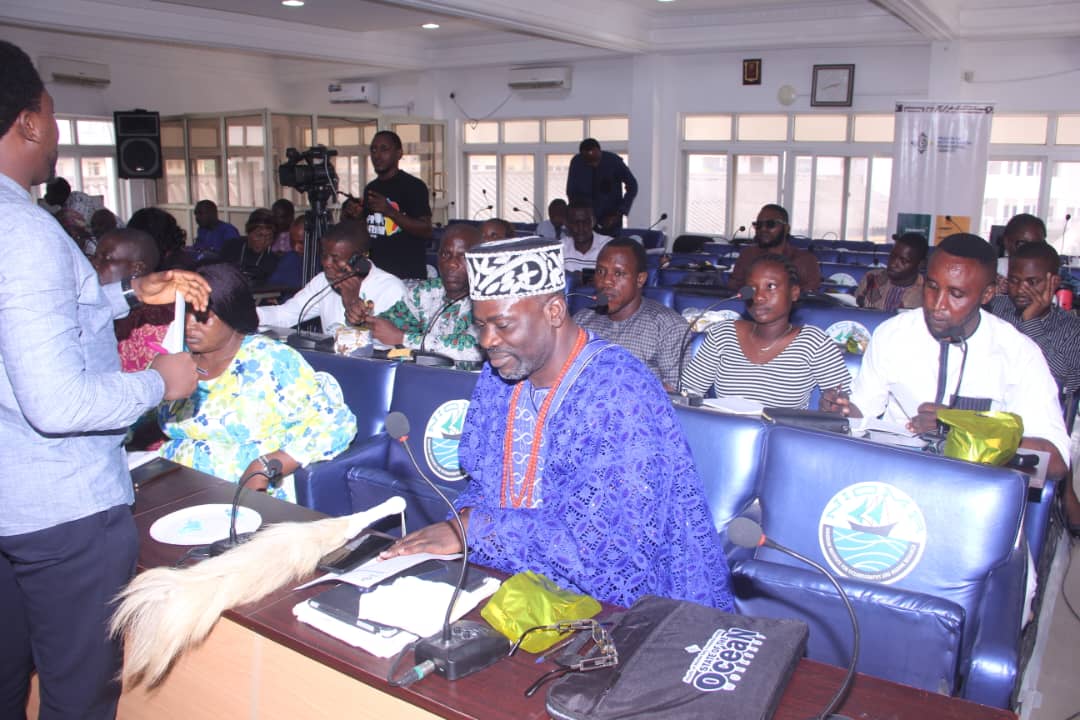
According to the Director of Research and Fisheries Resources, Dr. Patience Obatola – who represented the Executive Director/CEO of NIOMR, “the oceans around Africa are facing unprecedented challenges, including rising sea levels, ocean acidification, warming temperatures, and the proliferation of dead zones. These issues are exacerbated by human activities such as exploration and exploitation of marine resources, pollution from plastics and synthetic chemicals, and IUU fishing. The consequences of these challenges are far-reaching, affecting not only marine ecosystems but also the livelihoods and well-being of coastal communities. This workshop will provide a unique platform for us to take a deep dive into these issues, share knowledge, and co-develop strategies for addressing them. It is an opportunity for us to strengthen existing partnerships, forge new ones, and build a multi-sectoral consensus on the way forward”.
The Director, Health of Mother Earth Foundation, Nnimmo Bassey x-rayed the impacts of mindless exploitation activities offshore and nearshore that put profits over people. “Across the coastline of Nigeria, community folks are being forced from their territories, deprived of their resources, and left to grapple with the consequences of laxly regulated natural resource exploitation. The economic forces driving this destruction prioritize profit over people, extracting resources beyond the ocean’s capacity, and leave behind a trail of ecological devastation. The infrastructure of Nigeria’s economy begin at our shorelines and extend to the deep waters where resources are extracted— and coastal communities who bear the pressures from the land and the sea remain trapped in poverty. We cannot ignore the countless oil well blowouts that have polluted our waters: Akaso Well 4, Atanba, Bonny Terminal, Buguma Wellhead 008, Santa Barbara, and the ongoing inferno at Ororo Oil Well 1 at Awoye, Ondo State, which has been raging for close to five years now, among others. These disasters are ecological crimes that contribute to climate instability, and a worsening scarcity of land and water, placing entire communities and livelihoods at risk”, he said.
Participants (online and in-person) then broke into groups for a strategy session. During the group discussion, participants robustly discussed about the need for a State of the Ocean Report as well how to generate such report. The key questions were: what kind of report should the State of the Ocean, Africa report be? What indicators/variables are to be considered? What should the scope of the report be? How would/should research be carried out? And how could the needed resources be mobilized? The recommendations from the group session were presented in a plenary, with presenters from the various groups.
Generally, it was agreed that the report for the State of the Ocean should be extensive enough to cover the whole of Africa. It should be a scientific and data-driven report, multidisciplinary in nature (including coastal community dwellers, relevant scientists, government agencies, maritime workers and CSOs) with identified expertise and should produce a framework for Africa. Indicators as well as variables to be considered in the report were analyzed to include:
- Pollution including oil spill incidences (number of occurrences, areas affected and mitigation efforts), the level of presence of plastics in (a) the environment (b) in fish and other aquatic organisms.
- Ecological indicators – such as water quality, status of biodiversity, invasive species, climate change, Ocean acidification, number of MPAs, mangrove cover
- Governance and policy for example compliance with international frameworks and community engagement in research and conservation in the form of citizens science
- Aquaculture development and sustainable innovations of important economic species and small-scale fisheries support for livelihood
- Fisheries and food security – status of fish stocks, illegal unreported and unregulated fishing (frequency, economic losses and records)
Participants also noted the need to build movements and alliances and strengthen expertise around ocean tracking models including training on relevant software for data gathering and analysis.