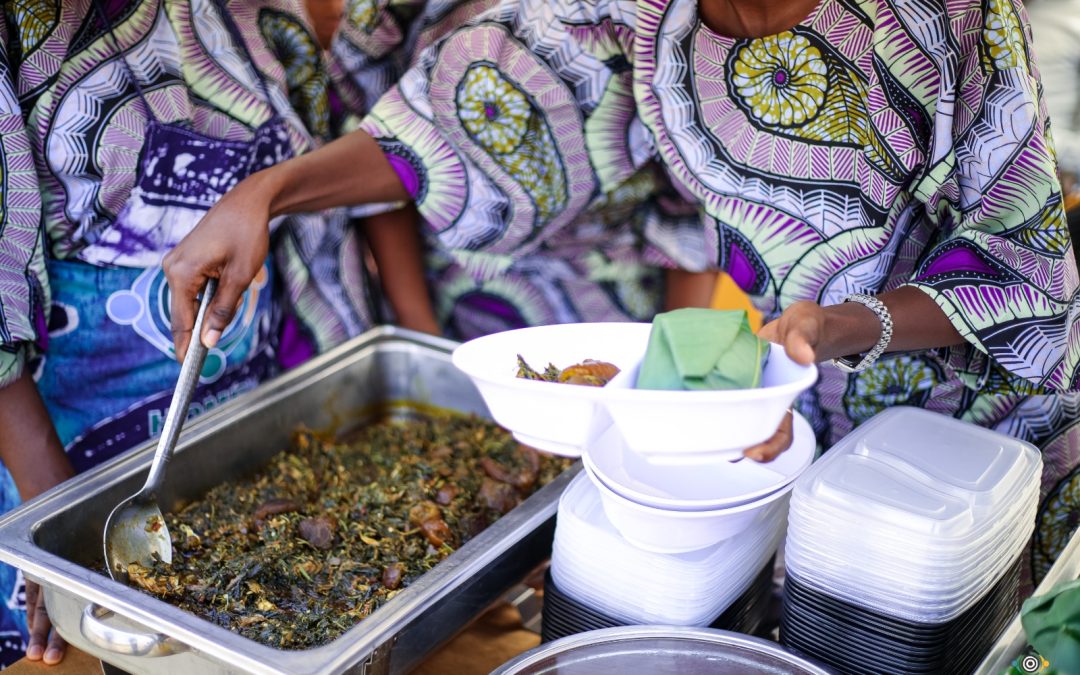
Food does not exist merely to satisfy hunger. Food, for the Nigerian people and indeed for Africans is deeply rooted in our culture as was demonstrated today by the diversity in flavours from different ethnic groups in the different geopolitical regions of Nigeria.
The 3rd edition of the Nigerian Food Festival, which held on 17th December 2025 at the Abuja Centre of Commerce and Industry featured among many other activities, a cooking competition where Chefs prepared on the spot, and presented Nigerian delicacies from the North Central, North East, North West, South East, South South and South West regions.
Some of these delicacies include: Atama and Fufu, Miyan Kuka and Tuwo Masara, Eforiro and Pounded Yam, Miyan Busheshe Kubewa and Tuwo Masara, Ofe Oha and Eba, Miyan Jeda and Tuwo Shinkafa. Also, there was highly flavourful Native Rice and Coconut Rice served with fish and garnished with Nigerian Dodo. We had street foods like suya, masa, akara and local bread. As a rule, there was no carbonated drinks served. Our choice of drinks were locally made, healthy and delicious ‘Kunu aya’ made from tigernuts and ‘Zobo’ made from hibiscus flower and fruits.
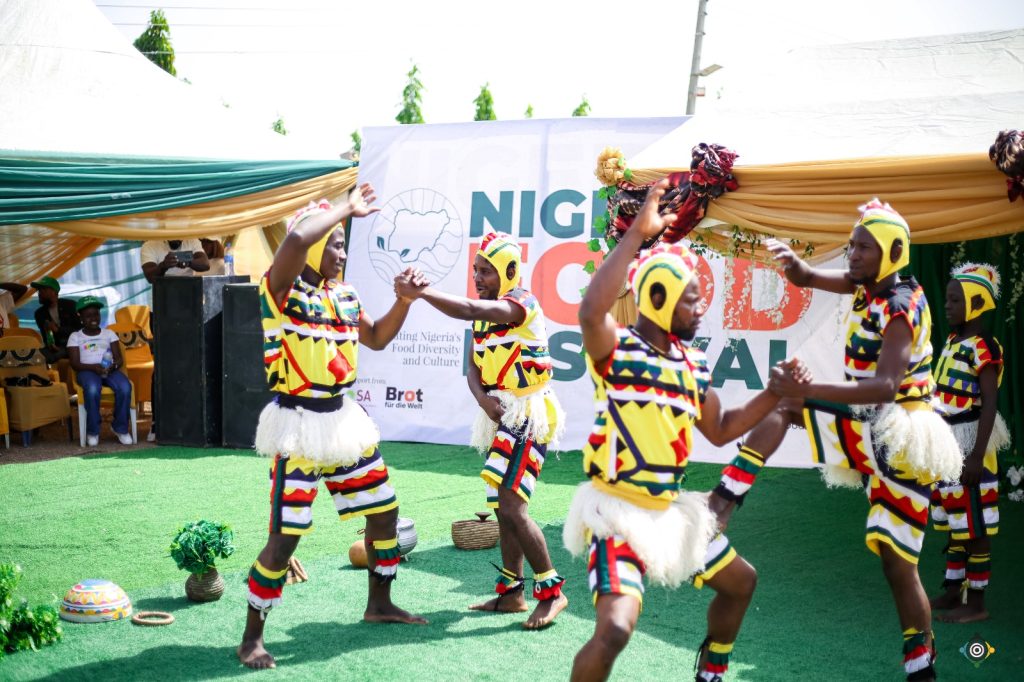
The event started with an atilogu dance session which captivated the audience and revived memories of cultural vibrancy, community celebrations, youth energy, and spiritual dynamism.
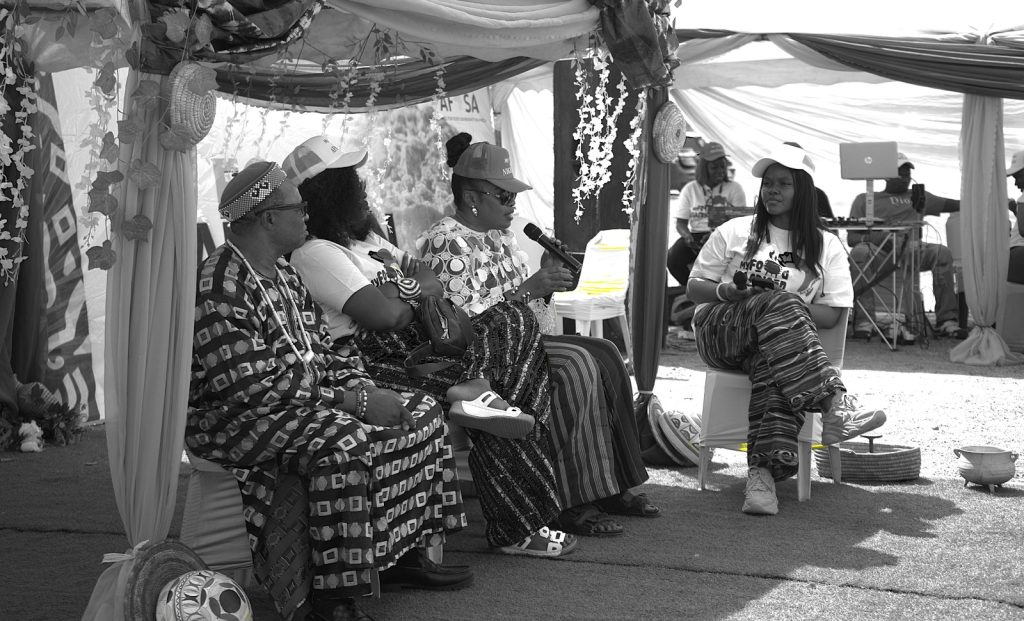
Following the dance session was a panel discussion with focus on “our food culture and why matters’. Main highlights from this session were that our local food is medicine, able to preserve health and life; food is identity and culture; and that having the right information and proper planning will help consumers, young and old make better food choices. Food shaming (looking down on certain foods and on people who consume them as socially “unfit”) was condemned by both the panelists and the audience. Central to the discussion was the need to preserve and promote food sovereignty – the right of people to safe and culturally relevant food. The discussants called on the government to enforce a ban on GMOs and highly hazardous pesticides and increase support for smallholder farmers to make healthy food more available and accessible to the public. The panelists were food system experts – Barr Mariann Bassey-Olsson (Food Sovereignty advocate and Deputy Director at Environmental Rights Action ), Dr Jacqueline Ikeotuonye(Medical Doctor and Country Coordinator at Bio-integrity and Natural Foods Awareness Initiative), Chief Nicholas Chibueze (Farmer and Chairman, Cassava Growers Association, Nigeria)
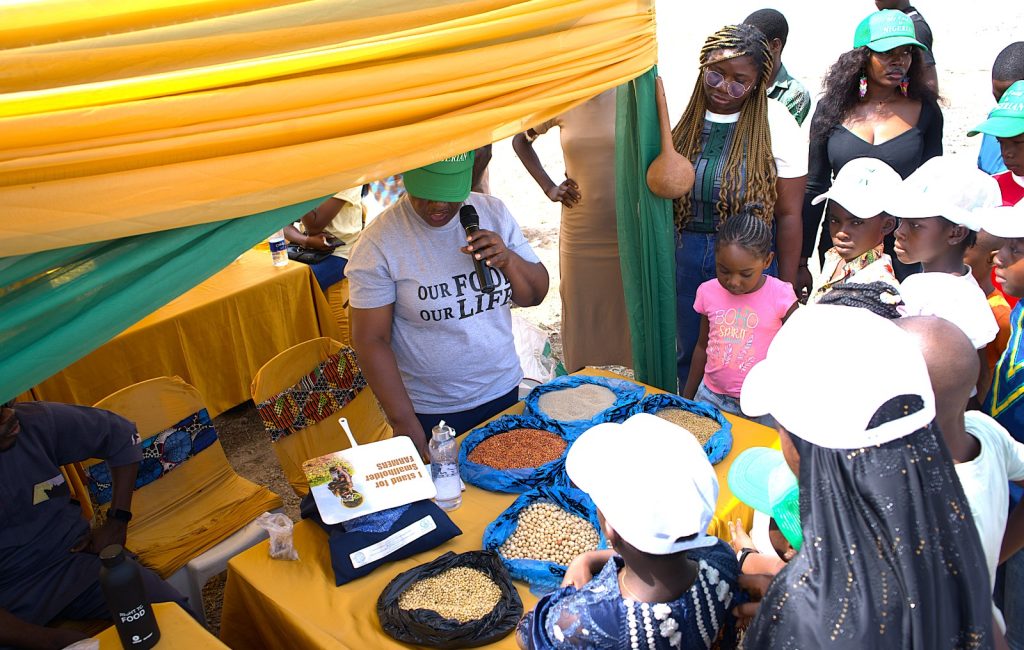
Seed is life. Seed is the future. Seeds embody generations of knowledge and cultural practices, integral to local food systems and identity. The food festival also featured an exhibition of seeds from across the country including Akidi, Ofor, Achi, Edu, Ede, Ahaja etc from the South East, the Bambara nuts, Sesame seeds, Soybeans, Chia Seeds, Millet, Fonio, Guinea Corn etc from the Nothern regions. We also saw cassava stems, hibiscus leaves, maize, rice and groundnuts. These seeds are highly nutrient dense -providing fiber, protein and essential minerals like iron, folate, potassium, and magnesium.
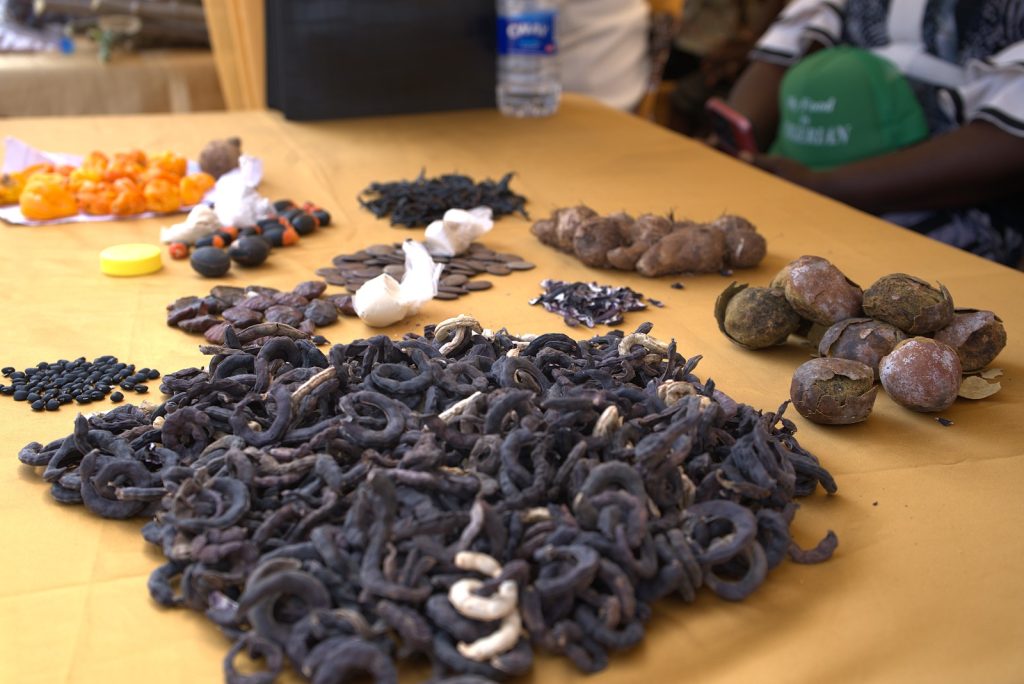
The women farmers who showcased these seeds highlighted several medicinal and cultural importance of each of the seeds including fertility improvement, blood sugar regulation, maintaining blood pressure, cleaning properties, weight loss, post delivery treatment, hormonal balance, aiding digestion, etc. Akidi for example is often prepared as a porridge or with yam and is prized for symbolizing unity and continuity in many Igbo communities. It is often served at important ceremonies like naming rites and funerals.
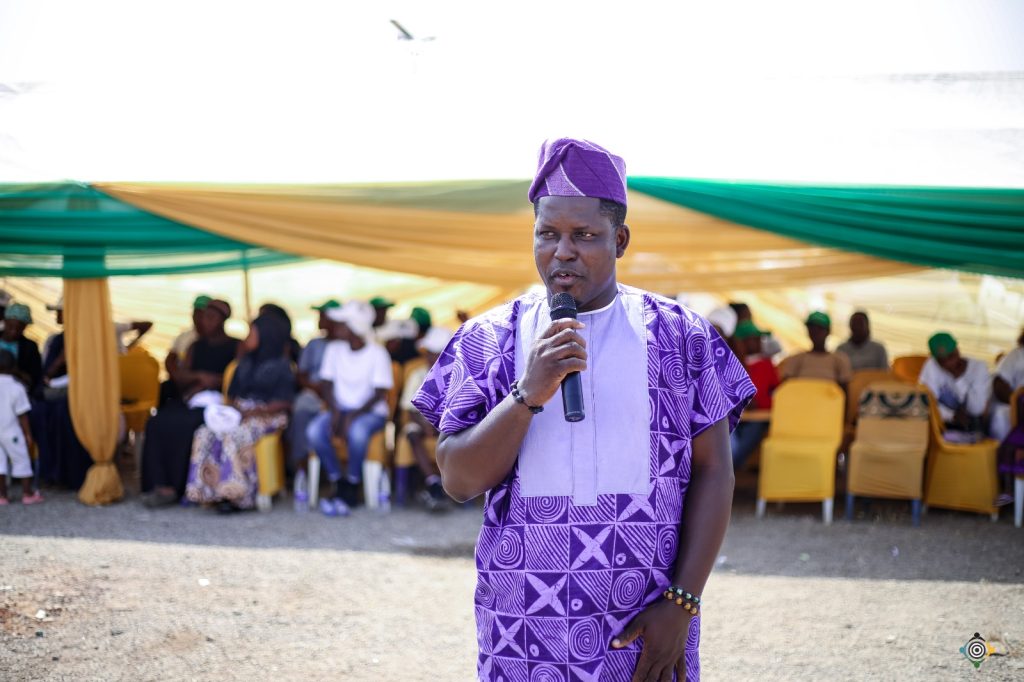
Art is a such a vital tool for cultural expression as it offers a unique language to communicate shared beliefs, traditions, and social commentary across generations and borders, making the intangible aspects of culture visible and tangible. In addition to the singing and dancing, Rije Kume, a farmer and story teller used poetry to paint the picture of what food was before “modernisation”. A time when our people relished the taste of food -every ingredient told a story and every bite held a memory of our mothers and grandmothers in glory; a time when Ugu, bitter leaf, Efo riro, rich in anti oxidants fought diseases before paracetamol arrived; a time when there were no chemicals or GMOs and all our fathers had was the soil and sunlight. Here’s an excerpt from his speech: “(Sneezes) Someone called my name…It is Ajanaku, the voice of truth, the voice of Africa. It says to tell and urge you, to eat what your ancestors ate, to honour the soil that bore you; for every plate must remember where it is coming from; for so will you be strong as the rocks; and be continuously reminded, that our medicine is also our food”.
The highpoint of the event was the presentation of the food by the chefs representing the six regions. The different chefs spoke about the foods they prepared including the nutritional and cultural value of the meals. The Chef from the South South Region said something profound in her presentation-that food is a unifier – bringing diverse people together, transcending language and fostering connection through shared meals, traditions, and creating a sense of belonging. It is no wonder they won the competition!
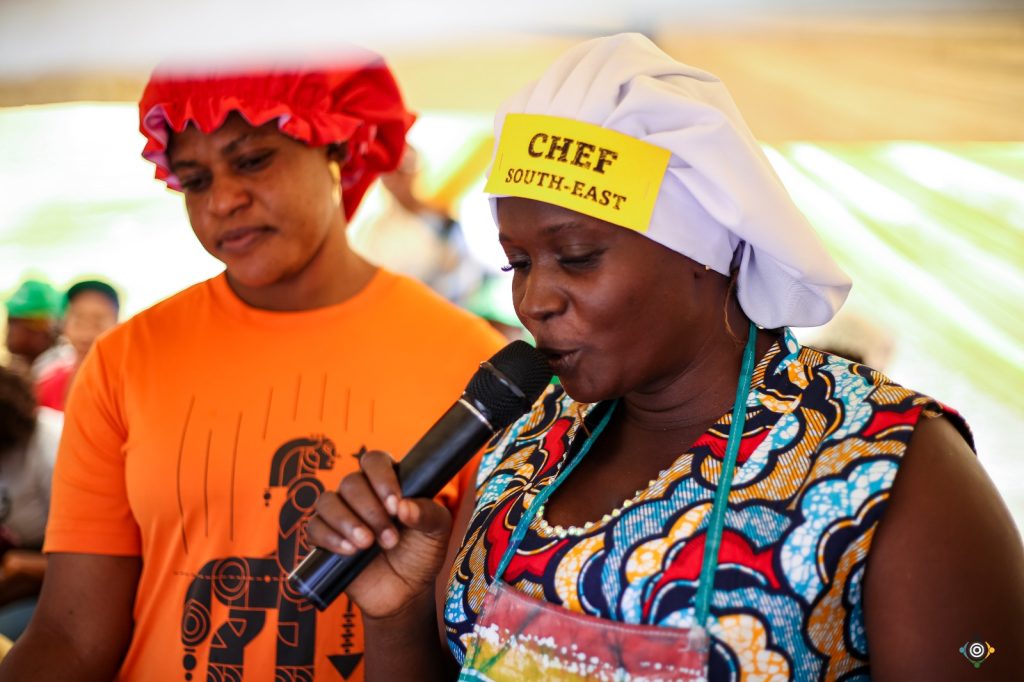
The judges – Chef Zainab(Culinary Expert) , Brian Nwana (Guiness Book of Records Holder/Social Media Influencer) and Lovelyn Ejim (Farmer and Executive Director of Network of Women and Youth in Agriculture) assessed the chefs based on the presentation of the food, taste/flavour and the chef’s ability to convey the uniqueness of the food. South West and North Central came first and second runner up respectively. All the competitors were given very substantial prizes. Although there was a champion of the day, all the meals were delicious and awakened a consciousness of our cultural roots. They resonated with our tastebuds.
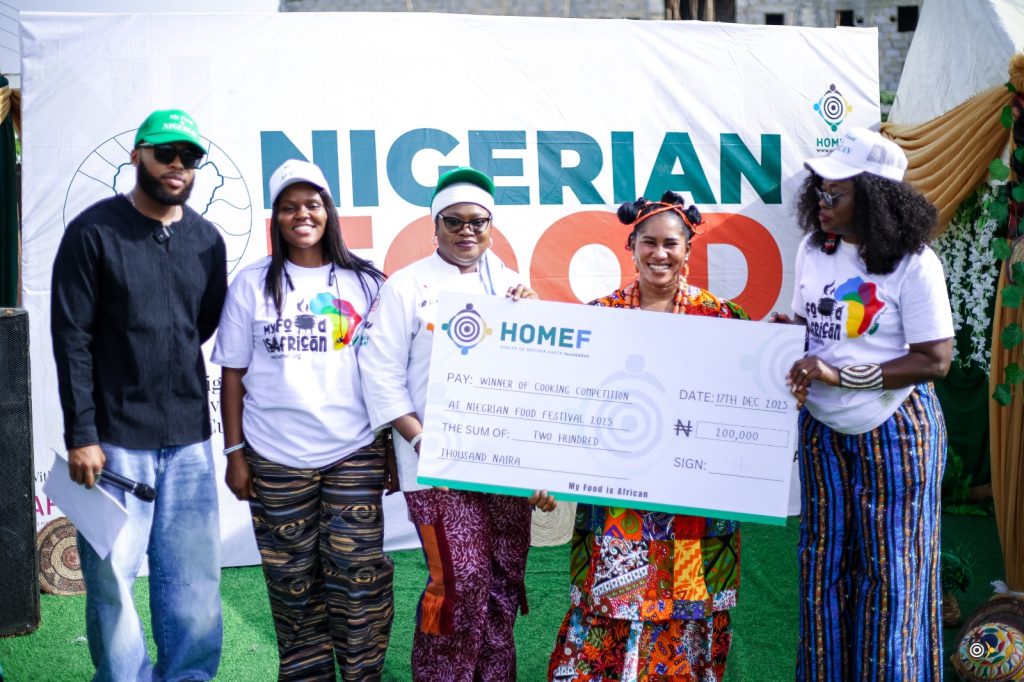
In the end, the participants acknowledged a positive change of behaviour with regard to their choice of food while they called on the government to enforce policies that ensure a preservation of food, culture and diversity.
The 2025 edition of the Nigerian Food Festival had in attendance, children, youth, farmers, artists, CSOs, chefs, journalists, and representatives from the Ministries of Education, Health, Agriculture and Food Security. The event was organised by Health of Mother Earth Foundation in collaboration with the Alliance for Food Sovereignty in Africa, Bread for the Word, Agroecology Fund, Environmental Rights Action, Corporate Accountability and Public participation Africa, Women Environment Programme, Youth for Environmental Sustainability and Development and a host of others.