The Niger Delta sits on one of the world’s most ecologically damaged landscapes: a region whose natural wealth has been extracted for decades while its communities absorb the compounding costs of pollution, abandoned infrastructure, and political neglect. The oil wells still burn, the pipes still leak, and the bodies of water that once sustained entire ways of life remain contaminated. What was once cast as a development problem has become, for those living within it, an emergency of survival.
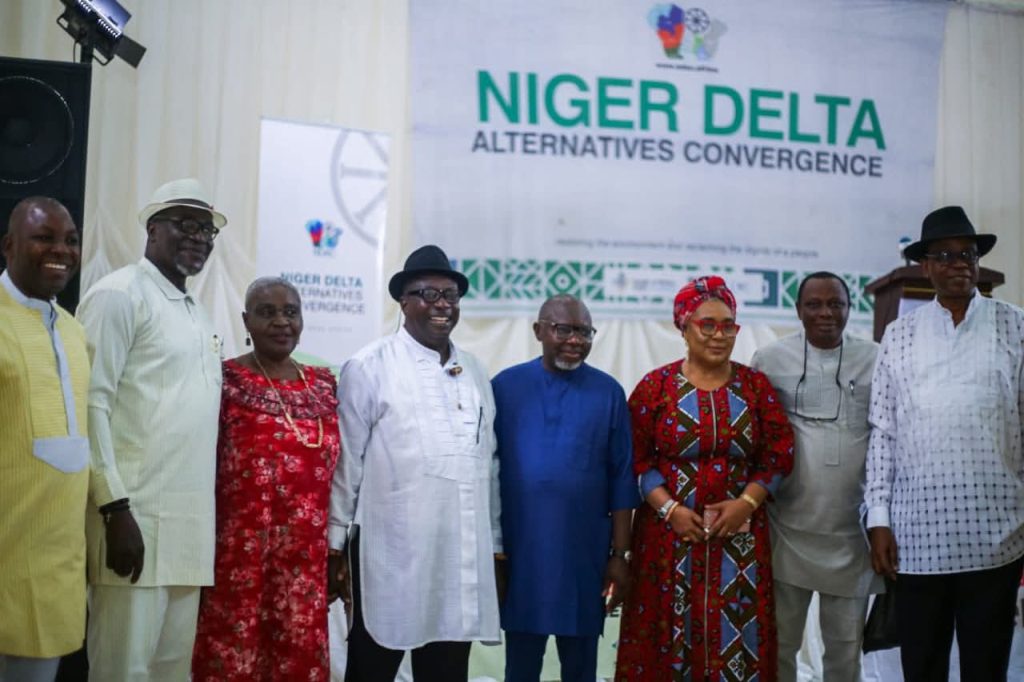
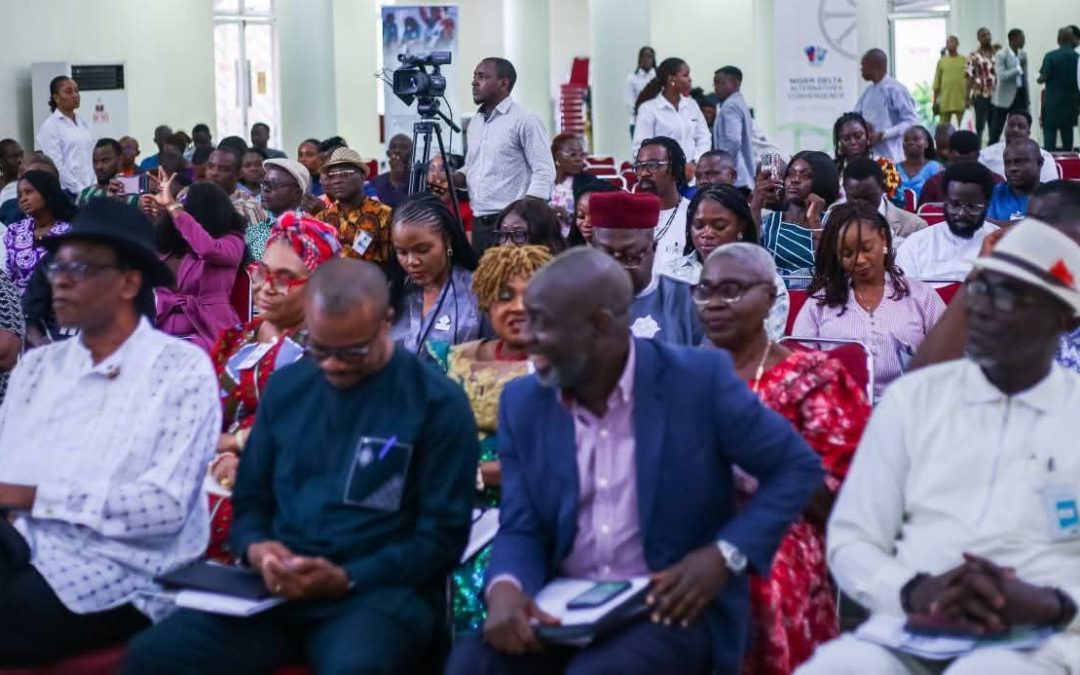
HOMEF convened the Fifth Niger Delta Alternative Convergence on 14 May 2026 in Uyo, Akwa Ibom State, bringing together environmental justice advocates, community leaders, traditional institutions, legal practitioners, academics, women leaders, youth organisers, and grassroots movements to examine the crisis with renewed urgency. The convergence focused on decommissioning abandoned oil infrastructure, environmental accountability and remediation, the consequences of asset divestment without cleanup, and the structural conditions that have allowed ecological destruction to proceed unchecked across generations.
Held in Uyo, the event drew participants from across affected communities in the Niger Delta and beyond, representing the full range of constituencies whose lands, livelihoods, and futures are most directly at stake. The breadth of participation reflected a growing consensus that the Niger Delta crisis demands a collective, coordinated response—not further delay.
The gathering opened with reflections on a paradox that has defined the region for decades: the enormous natural resource wealth that has coexisted with deep poverty, ecological devastation, and political abandonment. Participants insisted that the crisis can no longer be framed as merely environmental. It is a question of justice, governance, and intergenerational responsibility, one that involves corporations, regulatory agencies, and state institutions at every level.
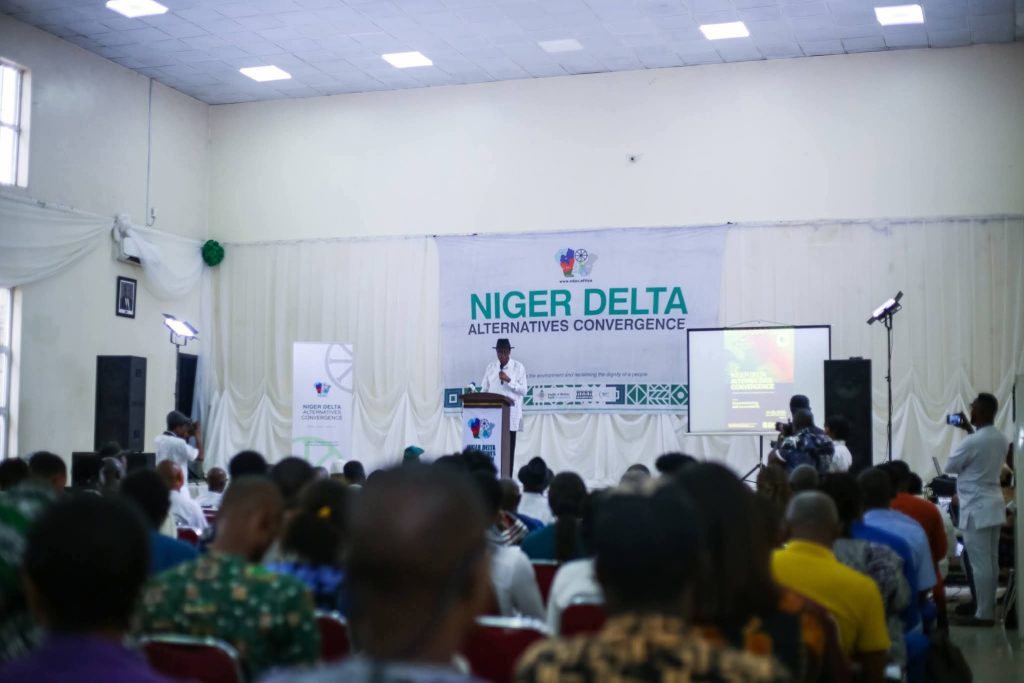
Drawing from a body of documented evidence that includes the Niger Delta Environmental Survey, the UNEP Environmental Assessment of Ogoniland, the Bayelsa State Oil and Environmental Commission report, and the recent Kebetkache Women Development Centre Health Impact Assessment in Otuabagi, speakers mapped out the full scale of ecological damage accumulated over decades of extraction. The reports, taken together, document widespread contamination, ecosystem collapse, severe public health consequences, loss of livelihoods, regulatory failure, and corporate negligence. Participants described the communities affected not as development casualties but as sacrifice zones—territories whose destruction has been systematically permitted in service of fossil fuel profit.
Decommissioning occupied the centre of the deliberations at the convergence. Participants rejected any framing of decommissioning as merely burying disused facilities underground or underwater. Proper decommissioning, the convergence maintained, requires the full dismantling of obsolete infrastructure, rigorous environmental remediation, ecosystem restoration, community compensation, and verifiable long-term safety commitments. Abandoned oil wells, leaking pipes, and gas flares were described as ecological time bombs, and calls were made for immediate environmental audits, transparent accountability mechanisms, and the replacement of ageing infrastructure across the region.
The convergence paid particular attention to the escalating problem of asset divestment, in which multinational oil companies are transferring polluted facilities to local operators with neither adequate cleanup nor functioning accountability frameworks. Participants characterised this as a dangerous laundering of environmental liability—one that deepens ecological destruction, weakens regulatory oversight, and leaves communities exposed to consequences they played no part in creating.
Panel discussions brought together legal, advocacy, and community perspectives on the path forward. Contributors emphasised that strategic litigation, grassroots mobilisation, rigorous documentation, and community participation are not supplementary tools but central pillars of any viable environmental justice strategy. Participants stressed that legal processes must remain accessible to local communities and grounded in local realities, languages, and lived experience. The inclusion of women, youth, and marginalised groups in all stages of environmental governance was raised not as an aspiration but as a structural necessity.
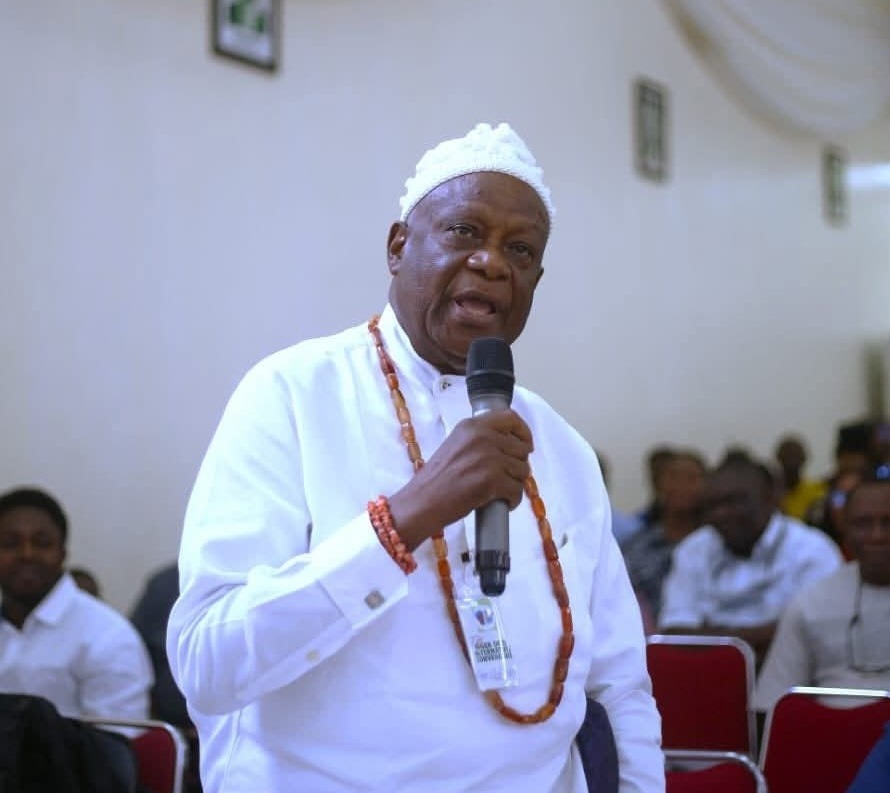
The convergence was unsparing in its analysis of the governance failures that have enabled the crisis to deepen. Corruption, institutional weakness, and political unaccountability were identified as conditions that allow corporate and political actors to evade responsibility while communities bear the full social, environmental, and economic weight of extraction. Speakers challenged any attempt to reduce the Niger Delta crisis to a technical or economic debate,s insisting that the human suffering, trauma, displacement, and ecological destruction experienced daily by affected communities must remain at the centre of every conversation.
The Fifth NDAC closed with a reaffirmation of the NDAC Manifesto as a living framework for justice, accountability, ecological restoration, and collective action, and with renewed demands for: immediate decommissioning of derelict oil facilities; comprehensive environmental remediation and ecological restoration; compensation and reparations for impacted communities; transparent audits of abandoned infrastructure; stronger regulatory enforcement; community-centred environmental governance; and an end to the expansion of fossil fuel extraction on land that has not yet recovered from the last fifty years of it.